

If you’re arranging team travel as a coach, team coordinator, or athletic department administrator, the job is bigger than finding a bus that seats everyone. You’re moving 20 to 56 athletes, coaches, trainers, and staff — plus equipment — around a fixed game clock, early departures, post-game delays, and sometimes multiple stops.
The right team bus makes that manageable. It comes down to three things: choosing the right-sized vehicle, building a schedule around the team’s actual arrival requirements, and working with a transportation company that understands athletic travel.
Here’s how to plan team transportation when traveling from Northeast Ohio.
Start With the Roster — and Everything That Travels With It
Passenger count is the obvious starting point, but it’s not the only number that matters. Count your entire travel party: players, coaches, athletic trainers, managers, and support staff.
Then account for the gear.
Depending on the sport, you may be hauling uniforms, bags, balls, sticks, helmets, training and medical equipment, and coolers. A bus that technically seats everyone can still fall short if equipment overwhelms the available storage.
Size the vehicle around your actual travel party and gear, not just the maximum roster.
Platinum Party Bus’s current shuttle fleet includes 23-, 27-, 31-, and 56-passenger buses, giving teams several options rather than forcing every group into the largest vehicle available.
Choosing the Right Bus for Your Team
23-Passenger Shuttle
For smaller squads, JV or club teams, or groups traveling with limited staff, the 23-passenger Grech Motors shuttle is a practical fit. It includes reclining leather seats with seat belts, climate control, per-seat USB charging, and a large trunk for equipment and luggage.
27- or 31-Passenger Shuttle
For larger rosters or teams traveling with coaches and staff that don’t require a full-size bus, the 27- and 31-passenger executive shuttles provide additional capacity with forward-facing leather seating, climate control, and overhead storage.
56-Passenger Shuttle Bus
For a full roster plus coaches, trainers, staff, and equipment, the 56-passenger shuttle bus is better suited to larger groups and longer trips. Amenities include an onboard bathroom, large trunk, Wi-Fi, and TVs — features that become considerably more useful on multi-hour road trips.
When One Bus Isn’t Enough
Larger programs don’t have to force the entire travel party into a single vehicle.
If you’re moving multiple squads, a large support staff, or additional personnel, ask about coordinating multiple vehicles. Platinum’s shuttle and large-group service can accommodate multi-vehicle planning when groups operate on different schedules or when passenger and equipment requirements make one bus impractical.
Account for Equipment and Storage
Equipment is one of the easiest things to underestimate when comparing buses.
Before booking, tell the transportation company exactly what you’re bringing. Don’t provide a headcount and assume everything else will fit. Ask where equipment will be stored and how much dedicated storage the vehicle provides.
This becomes especially important for overnight travel, when personal luggage must share limited space with sports equipment.

Build the Schedule Around the Game Clock
A team itinerary isn’t a normal group outing. Games start at a fixed time, and teams often need to arrive well beforehand for meetings, meals, walkthroughs, warmups, or other pregame preparation.
Build the transportation schedule backward from the team’s required arrival time — not kickoff, tipoff, or first pitch.
If the game starts at 7:00 p.m., arriving at 6:45 probably isn’t an option. Give your transportation provider the time the team actually needs to be on-site so travel time, traffic, stops, and appropriate buffers can be built into the itinerary.
Plan for Early Departures and Late Returns
College athletic schedules don’t respect normal business hours.
A road game might require a pre-dawn departure, while a tournament or night game can mean returning to campus well after midnight. Make those requirements clear when requesting transportation.
Post-game timing matters too. Coaches may need time for meetings, loading equipment, showers, media obligations, or other responsibilities before the team can leave.
If the return time is flexible, say so. If the team must leave at a specific time, make that clear as well. Building a realistic schedule from the beginning reduces problems later.

Account for Multi-Stop Team Travel
Team travel is often more complicated than a campus-to-opponent-and-back trip.
A typical itinerary could look like:
Campus → practice facility → team meal → venue → hotel
Tournament travel can involve multiple venues, hotels, restaurants, and practice facilities over several days.
Include every known stop when requesting your quote, and specify whether the bus is simply dropping the team off or needs to remain available throughout the trip. Platinum’s route planning can accommodate multi-destination group travel, but those requirements must be included in the itinerary from the start.
Northeast Ohio Means a Wide Range of Travel Needs
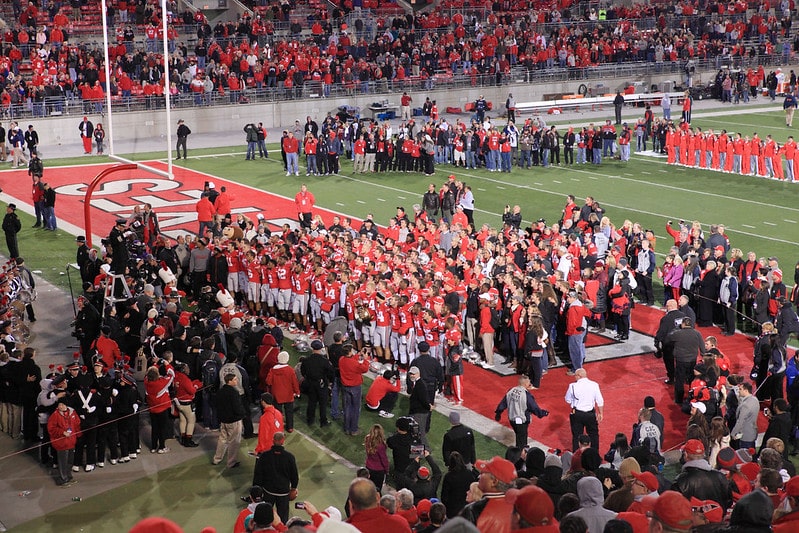
Northeast Ohio’s college athletics scene includes major university programs, Division III schools, and club teams.
Schools such as John Carroll, Baldwin Wallace, Case Western Reserve, Cleveland State, Akron, Kent State, Mount Union, Oberlin, and Hiram regularly travel throughout the region and beyond for games, tournaments, and other athletic events.
For a coordinator, that means an away trip could be a short regional run or a multi-hour road trip. Common travel corridors connect Cleveland, Akron, Canton, Alliance, Oberlin, and other college towns throughout Northeast Ohio.
The raw mileage is only part of the equation. The itinerary also has to account for required arrival times, traffic, scheduled stops, equipment loading, and the return trip.
Tournament and Overnight Travel Takes More Planning
A single away game is relatively straightforward. Multi-day tournaments require more coordination because transportation may remain part of the itinerary throughout the trip.
Determine where the team needs to be each day, when the bus must be available, where luggage and equipment will be stored, and how many transfers for hotels, practices, meals, or venues are required.
If the itinerary is finalized, provide the whole thing when requesting a quote. If details are still changing, provide what’s confirmed and identify what’s still tentative. That gives the transportation company a much more accurate picture of the trip.
Who Should Book the Team Bus?
Who arranges transportation varies by school.
An athletic department may handle travel centrally. A coach, administrator, or team coordinator may book transportation for an individual program. Club teams may have a student manager begin the process before an administrator provides final approval.
Before requesting a final quote, determine who within your college or university has authority to approve the reservation. Also check whether your school has requirements for outside transportation vendors, including insurance documentation, vendor approval, purchasing procedures, or payment requirements.
Sorting those details out early is much easier than discovering them after you’ve already selected a vehicle.
What to Ask When Requesting a Team Bus Quote
A useful quote request gives the transportation company enough information to understand the entire trip. At minimum, include:
- Number of athletes, coaches, trainers, and staff
- Type and approximate amount of equipment
- Travel date and required departure time
- Required arrival time at the venue
- Pickup and drop-off locations
- Game, practice, tournament, or event locations
- Planned meal, hotel, or practice stops
- Whether the trip is local, overnight, or multi-day
- Expected return time or whether the return is flexible
- Any school-specific insurance, documentation, or vendor requirements
You don’t need every detail finalized before starting the process. If portions of the itinerary are still being worked out, make that clear. A good booking conversation should identify any remaining information needed.
Understand the Quote and Contract
For a college or university, price is only one part of evaluating transportation.
Before signing a contract or paying a deposit, confirm exactly what the quote covers, including hours, stops, mileage, driver time, and any overnight requirements. Ask how itinerary changes are handled if the schedule shifts.
You should also understand the payment schedule, cancellation policy, and what is required to officially confirm the reservation.
If your school requires a certificate of insurance or other vendor documentation, bring that up early so the transportation company can provide what’s available before your institution’s approval process becomes a bottleneck.
Safety and Driver Standards
Safety should be part of the vendor review process, not simply a collection of reassuring claims.
Ask how vehicles are maintained and inspected, who will be driving the team, and what communication or tracking capabilities are available during the trip.
Platinum states that its vehicles are cleaned and inspected before pickup, that it uses professional, uniformed chauffeurs, and that it lists GPS among its onboard equipment.
For college transportation, your athletic department or risk-management staff may also require specific insurance, licensing, or vendor documentation. Confirm those requirements before booking so everything is in place before the team leaves campus.
Book Early Once the Schedule Is Set
College athletic schedules can create tight transportation availability, particularly when multiple teams are traveling on the same weekend.
Once your game or tournament schedule is confirmed, start arranging transportation rather than waiting until the week of the event.
Booking early gives you more time to choose the right vehicle, finalize the itinerary, gather institutional documentation, and accommodate schedule changes. It’s particularly important for multi-day tournaments and trips requiring multiple vehicles.
Get a Sizing Recommendation Based on Your Actual Trip
The right team bus isn’t automatically the biggest one.
A smaller squad or club team may be well served by a 23-passenger shuttle. A larger group of athletes and staff may fit a 27- or 31-passenger shuttle. A full roster with coaches, staff, and gear may require the 56-passenger shuttle bus, while larger programs may need multiple coordinated vehicles.
The right choice starts with four things: your actual headcount, equipment requirements, itinerary, and schedule.
Platinum Party Bus serves Cleveland, Akron, and surrounding Northeast Ohio communities, with shuttle options ranging from 23 to 56 passengers. Instead of guessing which vehicle you need, provide your roster size, equipment requirements, itinerary, and schedule so the team can recommend an appropriate fit.
Ready to plan your team’s next trip? Request a quote from Platinum Party Bus with your group size, equipment needs, destinations, and schedule, or call (440) 429-0256 to get started.
